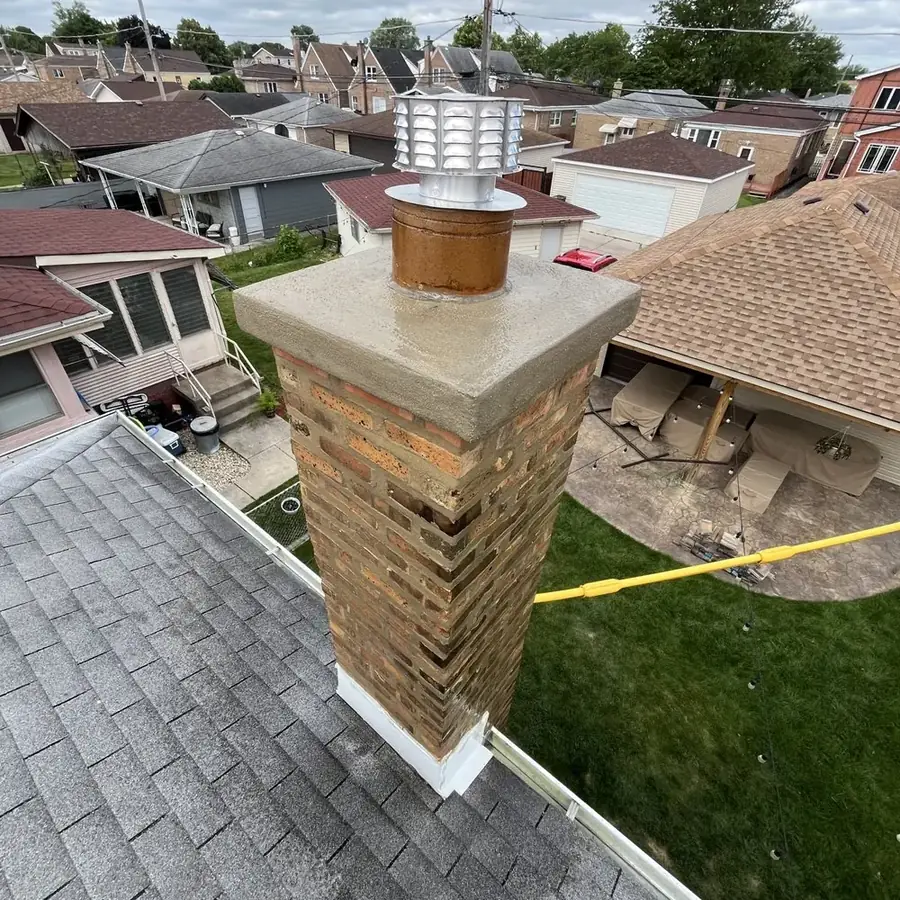
StormBear repairs chimney flashing, chimney housing, caps and tuck-pointing where the chimney meets the roof, for homes across Chicago and the nearby suburbs. Your next step is to book a free inspection so we can confirm the chimney is really the source.
Flashing repair — active leak or damage: $400 – $950, for chimney flashing resealed or replaced when water is already entering. Masonry, housing and cap work are priced in writing after we see it.
A focused flashing repair usually involves less work than extensive mortar-joint restoration. Access, chimney height, masonry condition and suitable weather for the selected materials determine the schedule; curing requirements can also affect completion.
Does a stain near the chimney prove the flashing failed?
Not necessarily: water can travel before it becomes visible indoors. We inspect the chimney connection and nearby roof, and recommend starting with a roof repair inspection if the source is unclear.
What is tuck-pointing intended to repair?
Tuck-pointing renews deteriorated mortar joints between masonry units. It is not a substitute for evaluating loose or badly damaged bricks, and it does not automatically correct a separate flashing leak.
Can sealing the chimney base solve every leak?
Surface sealant alone may leave a failed flashing connection unresolved. We check how the roof and masonry overlap so the recommendation addresses the water path instead of simply hiding a visible gap.
Does a chimney cap stop water from entering the flue?
A cap is designed to keep rain, snow and debris out of the flue opening, while flashing protects the joint where the chimney meets the roof. Each addresses a different entry point, so the inspection checks both.
Why can winter make masonry damage more noticeable?
Water entering small gaps can freeze and expand, gradually worsening weakened mortar or brick surfaces. Repeated Chicago freeze-thaw cycles make existing defects worth evaluating before another season of exposure. Tell us whether you have seen falling mortar or changing stains, but avoid climbing onto the roof or handling loose masonry to investigate the condition yourself.